Join Essenvia at RAPS Convergence 2026 — Booth #918
· Charlotte, 15–17 September
Read more →
Topic
RIM systems
Choosing and adopting a regulatory information management platform: what a RIM system does, how it differs from a QMS or PLM, and what implementation actually involves.

Why use a Regulatory (RIM) Platform to manage Product Registrations?
How a regulatory information management platform handles global registrations — centralised data, standardised submissions, and tracking requirements across markets.

Busting Naysayer Myths Around MedTech RIM Platforms
Essenvia CEO Soumya Mahapatra answers three common objections to RIM platforms: the cost, the disruption to existing workflows, and how long benefits take to appear.

A MedTech RIM Can Play a Vital Role as Companies Transition to EUMDR
The ever-evolving world of medical device regulations presents an era of continuous change, most notably with the EU’s Medical Device Regulation (MDR). Industry experts warn that noncompliance with the rule’s requirements could land MedTech manufacturers in hot water.

The impact of modern Regulatory (RIM) technology on time to market
Different policies and submission procedures across countries and regions create a significant barrier to meeting regulatory deadlines and can easily become an intricate puzzle if there is not a centralized Regulatory (RIM) Platform to merge and automate all regulatory processes and data.

Modern Regulatory (RIM) Platforms and Class III PMA
Class III PMA (pre-market approval) has a lot to offer for companies. In addition to getting clear approval for a device, Class III PMA also offers product protections similar in many respects to a patent, making it highly desirable.
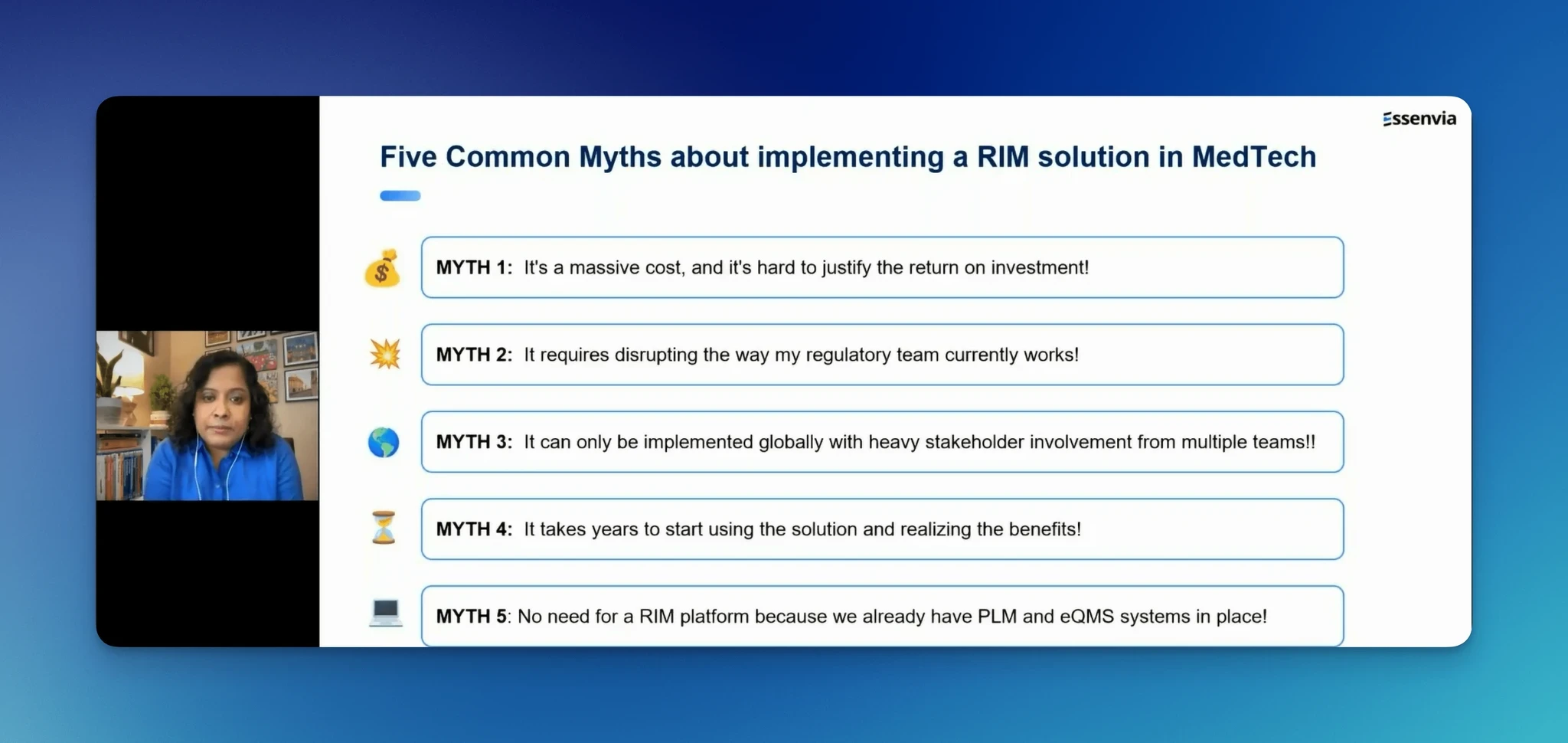
Adopting a RIM Platform in MedTech: Myths vs. Reality
Implementing a RIM platform can significantly enhance regulatory processes. However, several misconceptions often prevent medical device companies from adopting these platforms. In this webinar, we debunk the most common myths and demonstrate how RIM platforms can quickly generate ROI.

How Medical Device Companies Can Gain A Competitive Advantage By Transforming Their Regulatory Affairs Operations
Why regulatory operations decide time-to-market — where manual submission assembly introduces errors, and what the FDA's refuse-to-accept rate reveals about them.