Join Essenvia at RAPS Convergence 2026 — Booth #918
· Charlotte, 15–17 September
Read more →

Regulatory affairs, in practice
Durable know-how for the people who file — change assessment, submissions, market registration and AI governance.

Letter to file, or new 510(k)? Working through FDA's change guidance
FDA's Change assessment framework

What delays device registrations in Brazil, Mexico and India
Filing in a new market

When does a device change require a new submission?
A decision framework for multi-market portfolios

Why use a Regulatory (RIM) Platform to manage Product Registrations?
How a regulatory information management platform handles global registrations — centralised data, standardised submissions, and tracking requirements across markets.

What is Section 513(g) and How Does it Work
One of the hardest parts of developing a new device is determining exactly how to proceed with regulatory pathway, especially in the case of devices where initial assessments indicate multiple potential classes or uncertainty around clearly-defined class.

Busting Naysayer Myths Around MedTech RIM Platforms
Essenvia CEO Soumya Mahapatra answers three common objections to RIM platforms: the cost, the disruption to existing workflows, and how long benefits take to appear.

Essenvia Insights: Collisions Are Inevitable at the Crossroads of MedTech Regulation and Device Innovation. Exhibit A: EU’s MDR Fender Bender (Part 2 of 2)
Part two of a two-part series: regulatory experts on how the EU MDR transition has affected device innovation, and what it has cost manufacturers.
Essenvia Insights: ‘Checkpoints’ or ‘Obstacles’? For Device Innovation, MedTech Regulation Can be Friend and Foe (Part 1 of 2)
Part one of a two-part series: regulatory experts on whether MedTech regulation accelerates or obstructs device innovation — and when it does each.

Essenvia Insights: 8 Expert Tips for Cleaning Up SOPs for FDA’s QMSR (Part 2 of 2)
When the US Food and Drug Administration’s (FDA) new Quality Management System Regulation (QMSR) comes into force in early 2026, medical device manufacturers run the risk of falling down if they failed to start the process of updating standard operating procedures (SOPs) for quality systems right now, industry experts advise.

Essenvia Insights: 8 Expert Tips for Cleaning Up SOPs Before FDA’s QMSR Reg Takes Effect (Part 1 of 2)
Reviewing and updating standard operating procedures (SOPs) for quality systems should be top of mind for medical device manufacturers so they’re in compliance with the US Food and Drug Administration’s (FDA) new Quality Management System Regulation (QMSR) when it takes effect in early 2026.

A MedTech RIM Can Play a Vital Role as Companies Transition to EUMDR
The ever-evolving world of medical device regulations presents an era of continuous change, most notably with the EU’s Medical Device Regulation (MDR). Industry experts warn that noncompliance with the rule’s requirements could land MedTech manufacturers in hot water.

Achieving Regulatory Excellence Takes Commitment, Drive, Determination
Achieving regulatory excellence involves...

The Pathway to Regulatory Excellence for MedTech Manufacturers: 20 Key Best Practices
Regulatory Excellence is a crucial aspect of the Medical Technology industry, which involves complying with strict guidelines, ensuring procedural accuracy, and aligning strategically to navigate the complex landscape of compliance and approvals.

What is Regulatory Excellence? And Why it is Critical for MedTech Companies.
Regulatory Excellence encompasses the adherence to stringent guidelines, procedural accuracy, and strategic alignment necessary for navigating the complex landscape of compliance and approvals within the MedTech industry.

The impact of modern Regulatory (RIM) technology on time to market
Different policies and submission procedures across countries and regions create a significant barrier to meeting regulatory deadlines and can easily become an intricate puzzle if there is not a centralized Regulatory (RIM) Platform to merge and automate all regulatory processes and data.

Change Assessment in Medical Devices: Understanding Regulatory Implications
Navigating regulatory implications when making changes to medical devices is critical to ensuring compliance and market readiness. The evolving landscape demands a keen understanding of regulatory processes, especially in the United States, where the FDA oversees market entry through rigorous evaluations.

Modern Regulatory (RIM) Platforms and Class III PMA
Class III PMA (pre-market approval) has a lot to offer for companies. In addition to getting clear approval for a device, Class III PMA also offers product protections similar in many respects to a patent, making it highly desirable.

10 Steps to Navigate the FDA eSTAR Submission Process
Step by step through the FDA eSTAR process: eligibility, attachments and the 4 GB limit, the required forms, and what happens at technical screening.

How to Handle Pre-Sub and Q-Sub Strategy for FDA Submissions
How to ask the FDA a question that gets a useful answer — with before-and-after examples of Pre-Sub questions on biocompatibility, De Novo and predicate choice.
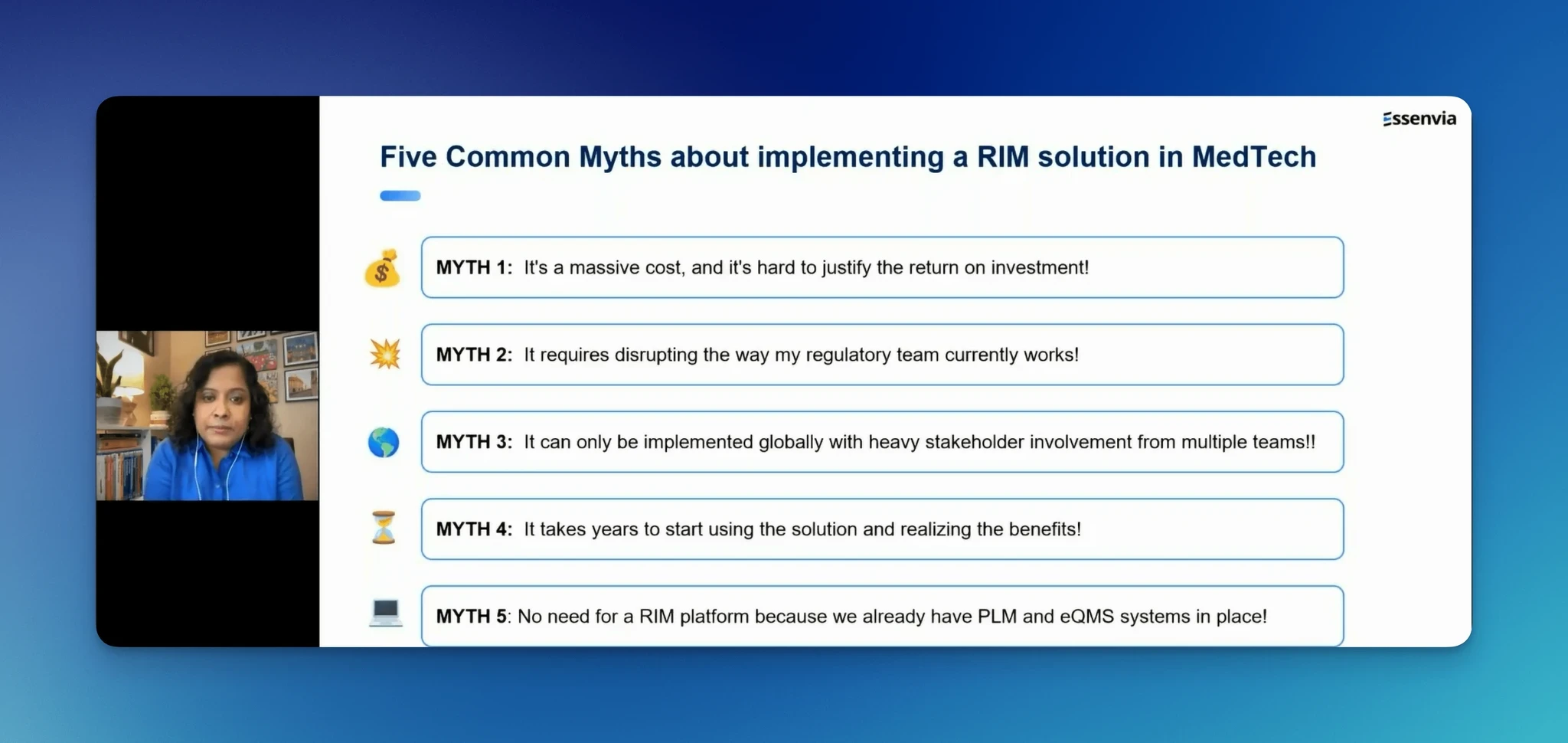
Adopting a RIM Platform in MedTech: Myths vs. Reality
Implementing a RIM platform can significantly enhance regulatory processes. However, several misconceptions often prevent medical device companies from adopting these platforms. In this webinar, we debunk the most common myths and demonstrate how RIM platforms can quickly generate ROI.

Crossing the eStar Chasm
How to rapidly transition to FDA's mandatory eStar submission process.

MedTech Regulation vs. Innovation: Can They Live Happily Together?
Regulation vs. Innovation in the medical devices industry represent an essential and never-ending balancing act and dance that must play out. In this roundtable webinar, four longtime MedTech industry experts will dissect and discuss challenges manufacturers face as they work to comply with rules and regulations.
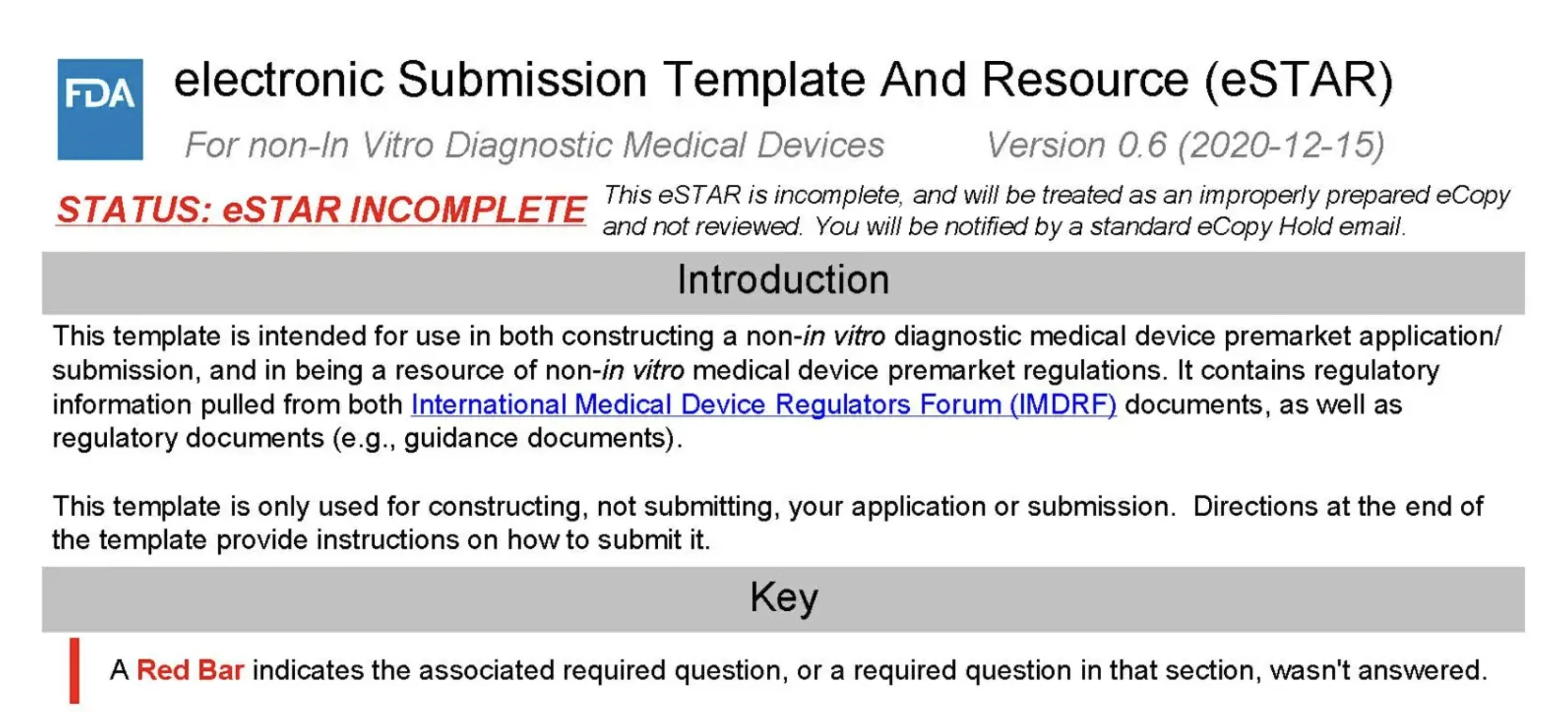
Your Guide to the FDA eSTAR program
How eSTAR works: what the template does, the two ways to submit, what you no longer need to include, and where submissions still run into trouble.

MDCG guidelines on the Periodic Safety Update Report (PSUR) - How can IVD Manufacturers Benefit
What MDCG-2022-21 means for IVD manufacturers: who must file a PSUR under IVDR Article 81, what it contains, and how legacy devices are treated.

How to Document Risk in your 510(k)
You can document Risk in a 510(k) by comparing subject device with one or more similar legally marketed devices to support substantial equivalency claims. To legally market your medical device, you need to demonstrate it is as safe and effective as any other legally marketed product that is not subject to PMA (21 CFR 807.92(a)(3)). The blog describes key factors for documenting risk management in 510(k) submissions.

The Ultimate Guide to Medical Device Classification for US FDA and European Union’s Medical Device Regulation (MDR)
If a manufacturer plans to distribute a medical device to the market in the United States or Europe, the company must first ensure that the device is in compliance with each target region’s medical device classification requirements.

Your Guide to European CE Mark for Medical Devices
Launching a new medical device is a highly regulated process whether you are looking to sell in the United States or other countries. To go to market within the European Union, you must first obtain a CE mark for your medical device. Please keep reading to learn about what a CE mark is, why it’s important, and how to get one.

510k vs PMA Submissions for Medical Devices in the United States
When manufacturers plan to launch a medical device into the United States market, one of the most crucial steps is obtaining FDA clearance.

What is GSPR (General Safety And Performance Requirements) for EU MDR and EU IVDR?
Establish conformity with these requirements and should provide sufficient evidence to demonstrate compliance with GSPR. GSPR is a core element to navigate CE marking for a device.
What does FDA Cleared vs. FDA Approved mean for Medical Devices?
Medical devices in the US (and the rest of the world) use a risk-based classification system that determines the rules and regulations and level of evidence necessary to obtain FDA permission to market a new or modified medical technology.

What do Regulatory Specialists need to know about searching the FDA 510(k) Database for Regulatory Strategy
Medical device manufacturers who intend to introduce a device into commercial distribution in the United States must submit a premarket notification – 510(k) or PMN to the FDA.This rule is applicable whether you are introducing a device for the first time, or planning a reintroduction with significant modifications.

How Medical Device Companies Can Gain A Competitive Advantage By Transforming Their Regulatory Affairs Operations
Why regulatory operations decide time-to-market — where manual submission assembly introduces errors, and what the FDA's refuse-to-accept rate reveals about them.

5 Reasons You Shouldn’t Work on Your 510(k) Submission Alone
First, you conceptualize your idea for a new medical device. Your team has determined what medical issue it is going to resolve and how it will be used. Then, you research the current state of the market to understand the level of need and how to best position it.

The Top 5 Reasons The FDA Rejects A 510(k) Submission
If you have ever put together a 510(k) submission, you know exactly how massive of an undertaking this project becomes.