Join Essenvia at RAPS Convergence 2026 — Booth #918
· Charlotte, 15–17 September
Read more →

FDA nIVD eSTAR v7.0: Key Changes for 510(k), De Novo, and PMA Submissions
What changed in FDA's nIVD eSTAR v7.0 — Human Factors, Clinical Evidence, QMSR alignment, pediatric indications and De Novo — and what it means mid-submission.
By Khurshid Salma
FDA nIVD eSTAR v7.0: What Changed and How to Prepare
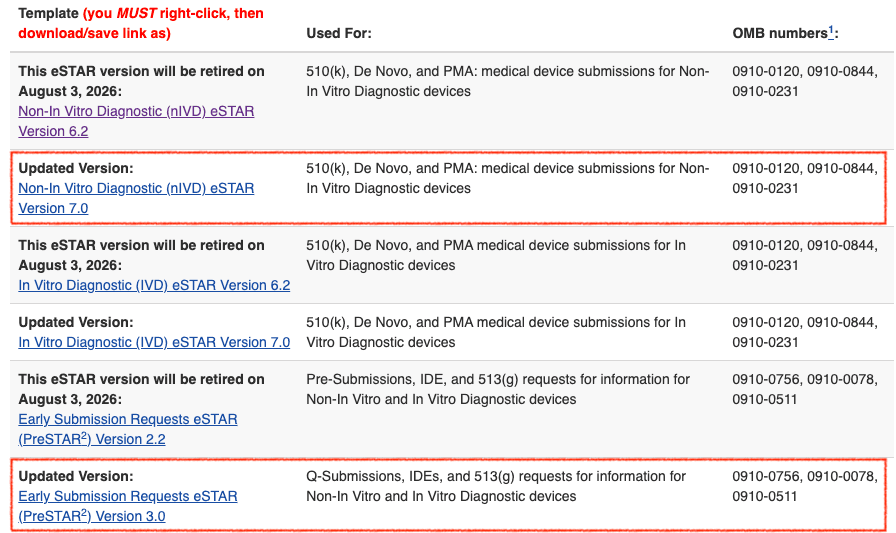
FDA’s non-IVD eSTAR Version 7.0 is more than a template update. It introduces important structural changes that affect how regulatory teams prepare 510(k), De Novo, and PMA submissions.
For medical device companies, the update reinforces a clear trend: FDA wants submissions to be more structured, traceable, and easier to review.
That creates an opportunity for teams with the right submission process. It creates friction for teams still managing eSTAR through manual PDF workflows, disconnected files, and last-minute attachment updates.
What changed in nIVD eSTAR v7.0?
Human Factors now has a dedicated place
FDA added a dedicated Human Factors subsection within Performance Testing.
This change makes Human Factors evidence easier to organize and connect to device performance. Teams should treat usability evidence as part of the submission story, not as a late-stage attachment.
Clinical Testing is now Clinical Evidence
Version 7.0 changes “Clinical Testing” to “Clinical Evidence” and adds a Real-World Data subsection.
This gives sponsors a clearer place to include post-market data, registry data, and real-world evidence when it supports the submission.
For regulatory teams, the goal is not just to collect evidence. The goal is to show how that evidence supports safety, effectiveness, and the overall regulatory argument.
PMA QMS content now aligns with QMSR
The PMA Quality Management System section now aligns with FDA’s Quality Management System Regulation.
PMA teams should review quality documentation and confirm that submission content reflects the updated QMSR framework. Legacy quality language can create avoidable review friction.
Pediatric indications require more detail
Version 7.0 adds pediatric age groups to the Indications for Use section.
If a device includes pediatric use, even for a subset of patients, teams need to define the relevant age groups clearly and keep labeling, indications, and supporting evidence aligned.
De Novo submissions are more structured
Version 7.0 removes the De Novo alternative practices textbox from Device Description and moves the De Novo classification summary into a formal attachment.
That creates a cleaner review package, but it also means teams should prepare the classification summary earlier in the submission process.
Standards and Additional Information are easier to manage
Applicants can now insert and reorder Standards and Additional Information responses.
This small usability change can save time, especially for submissions with long standards lists or evolving response content.
Why this matters for regulatory teams
The biggest challenge with eSTAR is not just filling out the PDF.
A strong eSTAR submission requires input from Regulatory, Quality, Clinical, Engineering, Human Factors, Labeling, and other stakeholders. When teams manage that work manually, they often lose time to version control, repeated data entry, disconnected source documents, and manual attachment updates.
As eSTAR becomes more structured, submission operations need to become more structured too.
How Essenvia helps
Essenvia helps MedTech teams move beyond manual eSTAR workflows.
With Essenvia eSTAR, teams can collaborate across sections, assign content ownership, map internal templates to eSTAR requirements, manage attachments, edit live with stakeholders, and preview the native eSTAR file in one click.
That means less manual rework, fewer preventable errors, and a faster path to a complete, review-ready submission.
The bottom line
FDA nIVD eSTAR v7.0 reflects the next stage of structured medical device submissions.
Human Factors, Clinical Evidence, QMSR alignment, pediatric indications, and De Novo documentation now have clearer homes inside the template.
Regulatory teams should review active submissions, assess whether migration is needed, and confirm that their content aligns with the updated structure.
Essenvia helps teams build eSTAR submissions faster, cleaner, and with more control.
Learn more about Essenvia eSTAR: https://essenvia.com/estar
FDA nIVD eSTAR v7.0: What Changed and How to Prepare
FDA’s non-IVD eSTAR Version 7.0 is more than a template update. It introduces important structural changes that affect how regulatory teams prepare 510(k), De Novo, and PMA submissions.
For medical device companies, the update reinforces a clear trend: FDA wants submissions to be more structured, traceable, and easier to review.
That creates an opportunity for teams with the right submission process. It creates friction for teams still managing eSTAR through manual PDF workflows, disconnected files, and last-minute attachment updates.
What changed in nIVD eSTAR v7.0?
Human Factors now has a dedicated place
FDA added a dedicated Human Factors subsection within Performance Testing.
This change makes Human Factors evidence easier to organize and connect to device performance. Teams should treat usability evidence as part of the submission story, not as a late-stage attachment.
Clinical Testing is now Clinical Evidence
Version 7.0 changes “Clinical Testing” to “Clinical Evidence” and adds a Real-World Data subsection.
This gives sponsors a clearer place to include post-market data, registry data, and real-world evidence when it supports the submission.
For regulatory teams, the goal is not just to collect evidence. The goal is to show how that evidence supports safety, effectiveness, and the overall regulatory argument.
PMA QMS content now aligns with QMSR
The PMA Quality Management System section now aligns with FDA’s Quality Management System Regulation.
PMA teams should review quality documentation and confirm that submission content reflects the updated QMSR framework. Legacy quality language can create avoidable review friction.
Pediatric indications require more detail
Version 7.0 adds pediatric age groups to the Indications for Use section.
If a device includes pediatric use, even for a subset of patients, teams need to define the relevant age groups clearly and keep labeling, indications, and supporting evidence aligned.
De Novo submissions are more structured
Version 7.0 removes the De Novo alternative practices textbox from Device Description and moves the De Novo classification summary into a formal attachment.
That creates a cleaner review package, but it also means teams should prepare the classification summary earlier in the submission process.
Standards and Additional Information are easier to manage
Applicants can now insert and reorder Standards and Additional Information responses.
This small usability change can save time, especially for submissions with long standards lists or evolving response content.
Why this matters for regulatory teams
The biggest challenge with eSTAR is not just filling out the PDF.
A strong eSTAR submission requires input from Regulatory, Quality, Clinical, Engineering, Human Factors, Labeling, and other stakeholders. When teams manage that work manually, they often lose time to version control, repeated data entry, disconnected source documents, and manual attachment updates.
As eSTAR becomes more structured, submission operations need to become more structured too.
How Essenvia helps
Essenvia helps MedTech teams move beyond manual eSTAR workflows.
With Essenvia eSTAR, teams can collaborate across sections, assign content ownership, map internal templates to eSTAR requirements, manage attachments, edit live with stakeholders, and preview the native eSTAR file in one click.
That means less manual rework, fewer preventable errors, and a faster path to a complete, review-ready submission.
The bottom line
FDA nIVD eSTAR v7.0 reflects the next stage of structured medical device submissions.
Human Factors, Clinical Evidence, QMSR alignment, pediatric indications, and De Novo documentation now have clearer homes inside the template.
Regulatory teams should review active submissions, assess whether migration is needed, and confirm that their content aligns with the updated structure.
Essenvia helps teams build eSTAR submissions faster, cleaner, and with more control.
Learn more about Essenvia eSTAR: https://essenvia.com/estar
Topics



See what your portfolio looks like when everything is sellable — and audit-ready.
A 30-minute demo, on your products and your markets. No sandbox, no trial to configure — a working conversation with people who know regulatory.
See what your portfolio looks like when everything is sellable — and audit-ready.
A 30-minute demo, on your products and your markets. No sandbox, no trial to configure — a working conversation with people who know regulatory.
See what your portfolio looks like when everything is sellable — and audit-ready.
A 30-minute demo, on your products and your markets. No sandbox, no trial to configure — a working conversation with people who know regulatory.